Previous: “Religious Landscape of Gerasa”
Note: This article presents a comprehensive view of blacksmithing and metallurgy in ancient Gerasa, drawing from archaeological evidence spanning our narrative timeframe of 1-200 AD to create a complete picture of this essential craft.
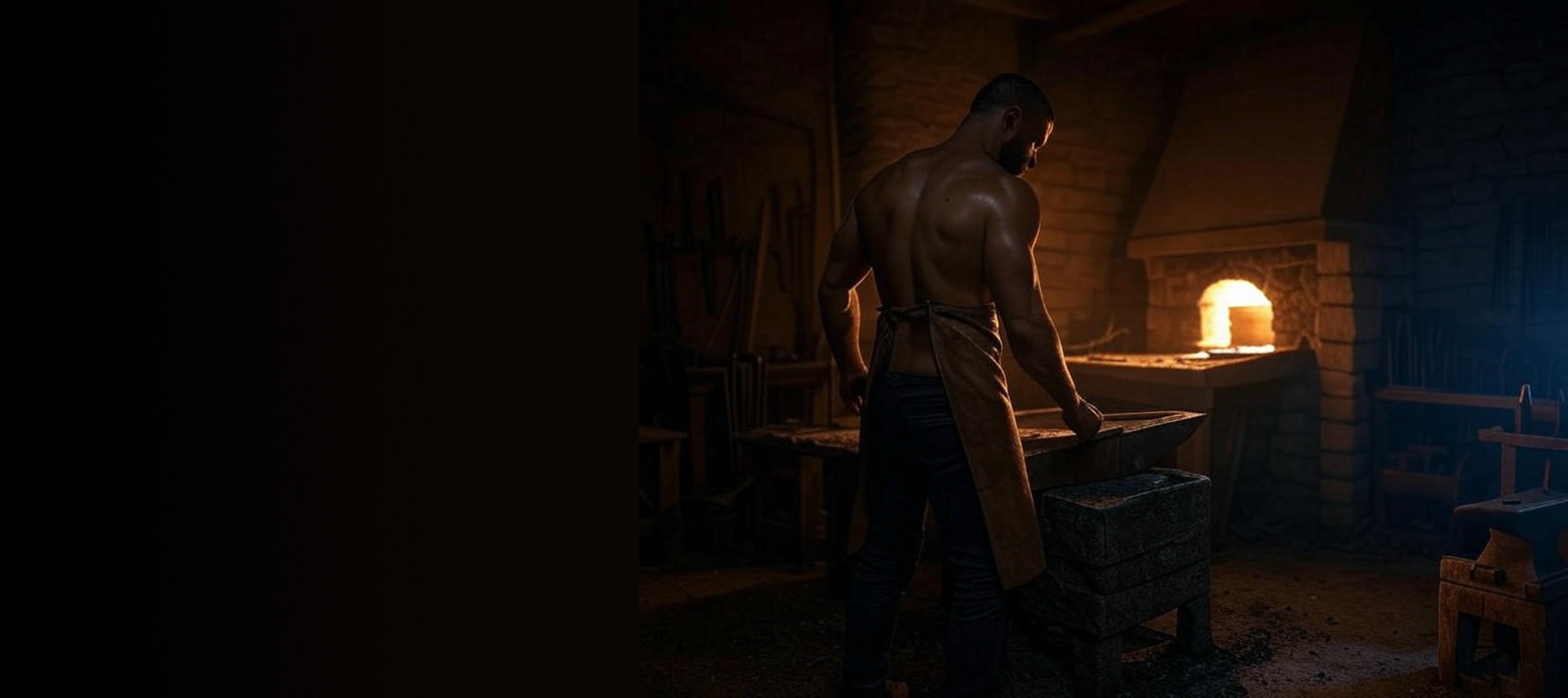
In the workshops scattered throughout ancient Gerasa, the rhythmic pounding of hammer on anvil echoed from dawn to dusk. The blacksmith’s forge, with its glowing bed of charcoal and the sharp hiss of hot iron meeting water, stood as one of the most vital yet least celebrated institutions in this prosperous Decapolis city. While merchants traded exotic goods from distant lands and wealthy citizens commissioned elaborate marble sculptures, it was the skilled hands of the metallurgist that forged the very foundation of urban life—creating everything from the iron nails that held buildings together to the sophisticated tools that enabled other craftsmen to practice their trades.
Archaeological Evidence from Gerasa: The Bronze Workshop Discovery
The most significant evidence for sophisticated metalworking in Gerasa comes from an exceptional discovery in the sanctuary of Zeus. Excavations have uncovered a large bronze workshop installation from the 2nd century AD that represents the largest and best preserved Roman-period bronze casting facility yet discovered in the region. This discovery demonstrates that Gerasa was not merely a consumer of metal goods but an active center of metallurgical production.
The workshop includes casting moulds and installations that attest to sophisticated artisanal bronze casting operations, covered by Byzantine and Roman period deposits. This evidence shows continuity of metalworking activities spanning several centuries, indicating the importance of this craft to the city’s economy.
Additional evidence for metalworking comes from analyses of copper-based artifacts recovered from the Northwest Quarter. Metallographic, chemical and lead isotopic analyses of copper-based artefacts provide new information on civic life and material culture, spanning the city’s occupation from its flourishing under Roman rule into the Byzantine and early Islamic periods. These studies reveal both production techniques and recycling practices used by Gerasa’s metalworkers.
-> Discover the impressive civic infrastructure these craftsmen helped build in our Walking Through Ancient Gerasa: A Monument-by-Monument Guide
Evidence of Daily Metalwork in Gerasa
Archaeological investigations have revealed specific metal implements used in daily life. Evidence from Umayyad period houses shows the use of large iron scissors for sheep shearing and large iron ladles for stirring materials, either soaked fibres or coals in fires. While these particular examples date to the Islamic period, they demonstrate the continuity of iron tool use that would have characterized earlier periods as well.
The household activities reveal a range of iron tools including implements for textile production, with sheep’s wool being prepared using metal scissors and various iron implements for managing fires and cooking. This evidence suggests that by the Roman period, iron tools were common in domestic settings throughout Gerasa.
The Northwest Quarter excavations have provided additional evidence for metalworking activities, with workshop areas and various iron implements discovered that speak to sophisticated metalworking capabilities throughout the city’s occupation.
Roman Metallurgical Techniques: Context for Gerasa’s Craftsmen
To understand the capabilities of Gerasa’s metalworkers, we must consider the broader context of Roman metallurgical knowledge. Roman smiths possessed sophisticated understanding of their craft, developed through centuries of practical experience. They could judge metal temperature by color changes and assess hardness through testing, giving them considerable knowledge about working different metals and alloys.
The primary fuel for metalworking was charcoal, which burned hotter and more consistently than wood, allowing smiths better control over their processes. Roman metallurgy encompassed work with silver, zinc, iron, mercury, arsenic, antimony, lead, gold, copper, and tin, creating a wide range of alloys for different purposes.
Roman blacksmiths developed various techniques for shaping metal, including hot punching holes rather than drilling them, which created stronger joints. They also mastered heat treatment processes, including hardening steel by heating it to cherry red and quenching in water, with controlled cooling rates achieved by adding salt or oil to the quenching medium.
Workshop Locations and Urban Integration
Archaeological evidence shows that pottery workshops in Gerasa were moved as the city developed, with craftsmen relocating from the hippodrome area to set up business nearer the Zeus Sanctuary, on the periphery of what became the upper temple complex, possibly joining other workshops. This pattern of workshop relocation and clustering likely applied to metalworking shops as well, creating specialized artisan quarters where different crafts could support each other.
The strategic placement of workshops near major construction projects made economic sense. Pottery kilns probably continued operation during construction of the upper temple complex of the Zeus Sanctuary around 160 AD, and metalworking shops would have been similarly positioned to serve major building campaigns.
Roman urban planning typically placed workshops throughout cities rather than segregating them, making craftsmen’s services easily accessible to the urban population. In Gerasa, this would have meant small metalworking shops scattered through residential areas, with larger installations near major construction sites and religious complexes.
-> Learn about the broader economic context that supported these craftsmen in our Economic Life in Gerasa
Materials and Local Resources
Gerasa had operational quarries in the 1st century BC and 1st century AD, which were abandoned in the 2nd century AD when Emperor Hadrian visited Gerasa in 129/130 AD. While these quarries primarily provided building stone, they may also have yielded iron ore deposits or provided access to metal-bearing materials.
The fertile surroundings of Gerasa offered excellent resources for charcoal production. The oak and hardwood trees in the surrounding hills would have provided the high-quality charcoal essential for achieving the temperatures needed for iron and steel work.
Raw materials would have arrived through Gerasa’s extensive trade networks. As a member of the Decapolis and an important stop on regional trade routes, the city had access to metal ores and finished goods from across the Roman Empire.
Products of the Metalworking Trade
Based on the archaeological evidence and the needs of a thriving Roman city, Gerasa’s metalworkers would have produced a wide range of goods:
Construction Hardware: The building boom evident in 1st-2nd century Gerasa created enormous demand for iron construction materials. Every building required thousands of iron nails, clamps for joining stone blocks, hinges for doors, and locks for security. Iron keys were common throughout Roman provinces, and examples have been found in archaeological excavations across the region.
Agricultural Tools: The fertile hinterland of Gerasa required a constant supply of farming implements. Metalworkers would have forged plowshares, sickles, hoes, and pruning knives. The evidence of iron scissors for sheep shearing demonstrates the variety of specialized agricultural tools that were needed.
Household Items: Domestic metalwork included cooking implements, fire management tools, and iron fittings for wooden furniture. The archaeological evidence of iron ladles shows that metal cooking implements were common in Gerasa households.
Decorative and Religious Objects: The sophisticated bronze workshop in the Zeus sanctuary suggests that some metalworkers specialized in creating decorative items and religious objects for temples and wealthy patrons.
Social Organization and Status
Roman literary sources often portrayed craftsmen as holding low social status, but modern archaeological evidence suggests a more complex reality. Skilled metalworkers, particularly those working in bronze and precious metals like those in Gerasa’s Zeus sanctuary workshop, likely enjoyed higher status than general laborers.
The sophistication of the bronze casting installation in the Zeus sanctuary indicates that some metalworkers operated at an elite level, serving religious institutions and wealthy patrons. These craftsmen would have required years of training and considerable skill to produce the complex bronze work evidenced in the archaeological record.
Workshop organization likely involved a mix of free craftsmen, slaves, and apprentices. The large scale of the Zeus sanctuary bronze workshop suggests that it employed multiple workers with different skill levels, from master craftsmen to apprentices learning the trade.
-> Explore how metalworkers fit into the broader social structure in our Social Classes and Demographics
Technological Capabilities
The bronze workshop discovery reveals sophisticated technological capabilities among Gerasa’s metalworkers. The installation includes casting moulds and equipment that demonstrate advanced bronze working techniques, representing the largest and best preserved example of Roman period bronze casting yet discovered in the region.
Roman metallurgy represented advanced technology for its time. Smelting required carefully controlled temperatures and atmospheres, with smiths learning to manage their forges to achieve the heat needed for different metals and alloys. The consistency and quality of Roman metalwork across the empire demonstrates standardized techniques and knowledge transmission.
Evidence of recycling practices shows that Gerasa’s metalworkers were sophisticated in managing materials, regularly melting down broken tools and worn-out items to create new products. This recycling capability required understanding of alloy compositions and melting temperatures.
Continuity Through Changing Times
The evidence spans the city’s occupation from its flourishing under Roman rule into the Byzantine and early Islamic periods, demonstrating remarkable continuity in metalworking traditions. Even as political systems changed, the fundamental skills and techniques of metallurgy remained essential to urban life.
The presence of iron tools in Islamic period houses, including scissors and ladles, shows that metalworking traditions continued long after the classical period, indicating how essential these crafts were to daily life regardless of political changes.
Legacy of Gerasa’s Metalworkers
The metalworkers of Gerasa left their mark in the archaeological record through the sophisticated bronze workshop in the Zeus sanctuary and the various iron implements found throughout the city. Their skills were essential to the construction projects that made Gerasa one of the most impressive cities of the Decapolis.
The continuity of metalworking from Roman through Islamic periods demonstrates how fundamental these crafts were to urban civilization. While political powers changed and architectural styles evolved, the basic need for skilled metalworkers remained constant, making them among the most essential, if often unrecognized, contributors to Gerasa’s long prosperity.
The bronze workshop discovery stands as a testament to the high level of technological sophistication achieved by Gerasa’s craftsmen, representing not just local production capabilities but participation in the broader technological networks of the Roman Empire.
Disclaimer:
All images used in this article are the property of their respective owners. I do not claim ownership of any images and provide proper attribution and links to the original sources when applicable. If you are the owner of an image, please contact us so I can add your information or remove it if you wish.
Sources:
- “Official Guide to Jerash” with plan by Gerald Lankester
- “The Chora of Gerasa Jerash” by Achim Lichtenberger and Rubina Raja
- “Jarash Hinterland Survey” by David Kennedy and Fiona Baker
- “Antioch on the Chrysorrhoas Formerly Called Gerasa” by Achim Lichtenberger and Rubina Raja
- “Jarash Hinterland Survey — 2005 and 2008” by David Kennedy and Fiona Baker
- “A new inscribed amulet from Gerasa (Jerash)” by Richard L. Gordon, Achim Lichtenberger and Rubina Raja
- “Apollo and Artemis in the Decapolis” by Asher Ovadiah and Sonia Mucznik
- “Onomastique et présence Romaine à Gerasa” by Pierre-Louis Gatier
- “Dédicaces de statues “porte-flambeaux” (δαιδοῦχοι) à Gerasa (Jerash, Jordanie)” by Sandrine Agusta-Boularot and Jacques Seigne
- “Un exceptionnel document d’architecture à Gérasa (Jérash, Jordanie)” by Pierre-Louis Gatier and Jacques Seigne
- “Zeus in the Decapolis” by Asher Ovadiah and Sonia Mucznik
- “The Great Eastern Baths at Gerasa Jarash” by Thomas Lepaon and Thomas Maria Weber-Karyotakis
- “Architectural Elements Wall Paintings and Mosaics” by Achim Lichtenberger
- “Glass Lamps and Jerash Bowls” by Rubina Raja
- “Water Management in Gerasa and its Hinterland” by David D. Boyer
- “Hellenistic and Roman Gerasa” by Rubina Raja
Leave a Reply