Previous: “Household Treasures of Ancient Gerasa”
Note: This article presents Gerasa as it developed from 1-200 AD, merging archaeological evidence from across this period to showcase the city at its full Roman splendor.
The prosperity of ancient Gerasa rested not only on its strategic location and civic grandeur but on an intricate network of public infrastructure that sustained daily life for thousands of inhabitants. From the ingenious water management systems that brought fresh springs to every quarter of the city, to the carefully engineered roads that connected Gerasa to the broader Roman world, the city’s infrastructure represented some of the finest Roman engineering adapted to the challenging terrain of the Jordanian highlands.
The Lifeblood of the City: Water Management Systems
Water was the foundation of life in Gerasa, and the Romans transformed the city’s relationship with this precious resource through sophisticated engineering. The city’s primary water source flowed from springs located at Suf, approximately 6-7 kilometers northwest of the urban center. These springs, feeding what the Romans called the Chrysorrhoas or “Golden River” (known today as Wadi Jerash), provided the foundation for an elaborate water distribution network.
The Roman engineers constructed multiple aqueduct systems to channel water from the spring area to various parts of the city. Archaeological evidence reveals the remains of stone water channels – carefully crafted U-shaped blocks that may have contained terracotta pipes. Some 23 such channel blocks have been documented in the Wadi Deir area north of Jerash, with additional sections visible within the archaeological park itself.
The upper valley between Gerasa and Suf was managed through an extensive system of terraces that maximized agricultural productivity while preventing erosion. Roman-period inscriptions speak of the “gardeners of the upper valley,” who formed their own professional association, underlining the agricultural significance of this carefully managed landscape. These gardeners were not mere laborers but landowner-citizens whose fertile holdings in the territory contributed to the city’s prosperity.
-> Discover how the Golden River shaped the city’s sacred landscape in our “Religious Landscape of Gerasa”
Within the city itself, water management took multiple forms. Large cisterns carved directly into bedrock collected and stored rainwater and spring water throughout the urban area. Many of these cisterns were lined with waterproof plaster and featured carefully engineered feeder channels that directed runoff from streets and rooftops. The discovery of intact terracotta pipes with lead sieves demonstrates the sophisticated filtration systems used to keep stored water clean and debris-free.
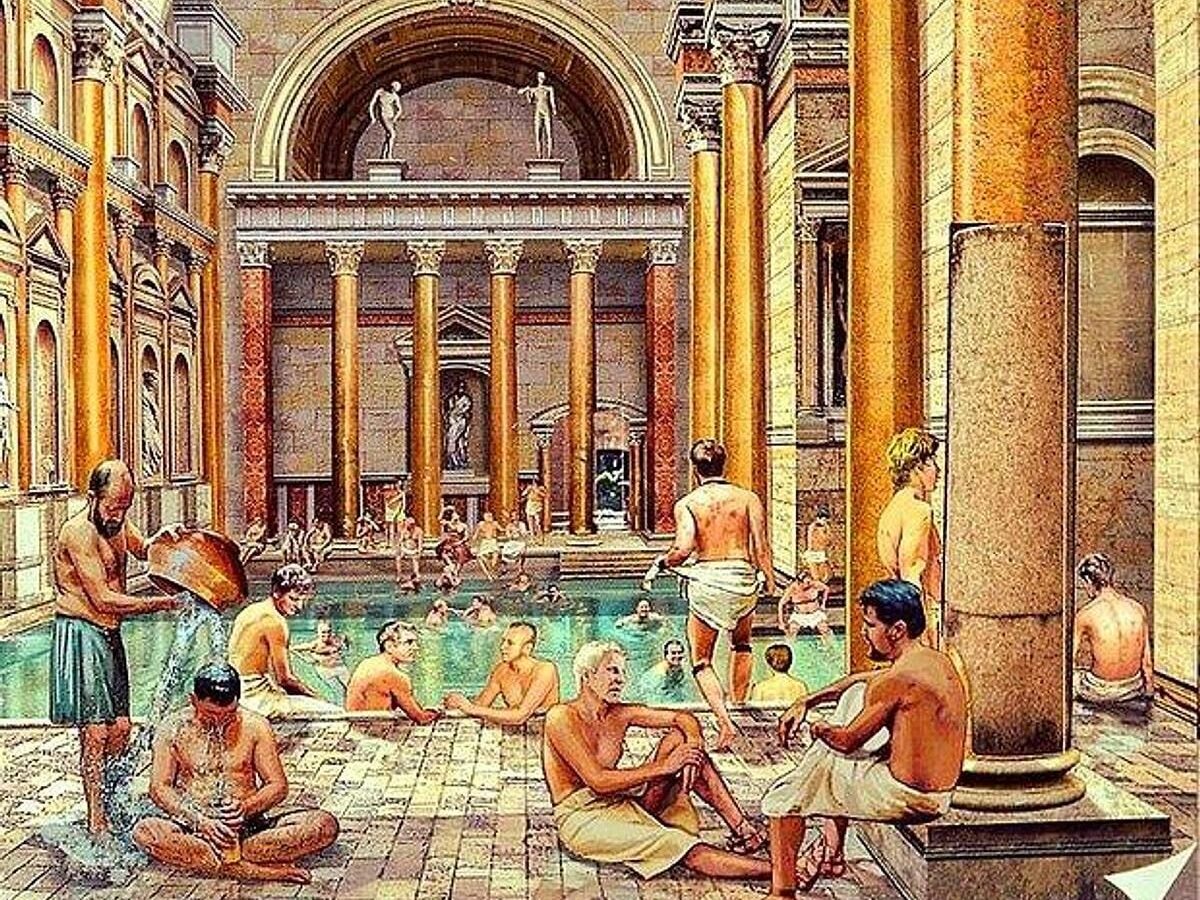
The Romans also constructed extensive bath complexes that served both hygienic and social functions. The Great Eastern Baths represent one of the most sophisticated examples of Roman thermal engineering in the region. This massive complex featured the traditional sequence of frigidarium (cold room), tepidarium (warm room), and caldarium (hot room), along with a large outdoor pool or natatio for swimming and exercise. The complex required constant supplies of both cold and hot water, achieved through hypocaust heating systems and elaborate plumbing networks.
The Great Eastern Baths: A Marvel of Roman Engineering
The Great Eastern Baths complex demonstrates the Romans’ mastery of hydraulic engineering and their commitment to public health and social life. The facility covered several thousand square meters and could accommodate hundreds of bathers simultaneously. The Roman phase included a monumental piscine (outdoor pool) with large quadrangular slabs of hard pink limestone forming the backdrop, while the walls featured parietal veneer fitted against brick masonry.
Archaeological excavations have revealed the sophisticated construction techniques employed in these baths. The facility featured both barrel-vaulted chambers and rooms with saucer domes on pendentives – one of the earliest examples of this architectural innovation dating from the end of the 2nd century AD. The complex included elaborate marble decoration, with sculptural fragments representing gods, muses, and mythological figures that adorned the bathing halls.
-> Explore the social world of the baths in our “Daily Life and Routines”
Transportation Networks: Roads and Gates
Gerasa’s prosperity depended heavily on its connections to the wider Roman world, and the city was integrated into an extensive road network that linked it to other Decapolis cities and major trade routes. Roman milestones document several roads connecting Gerasa with neighboring cities, and physical evidence of actual Roman-period roads has been preserved in multiple locations.
The city was enclosed by substantial defensive walls that followed the natural contours of the valley on both sides of the Chrysorrhoas River. These walls, built primarily of well-cut limestone masonry with rubble fill, stretched for over 3.4 kilometers around the urban area. The wall system included solid bastions positioned at regular intervals of approximately fifty meters, connected by curtain walls two and a half meters thick. This was designed as an enclosure wall to ward off raids rather than withstand a prolonged siege with engines, reflecting the relatively peaceful conditions of the Roman period.
Multiple gates provided access to the city at strategic points. The gates themselves were architectural statements, often featuring elaborate decoration and monumental proportions. Archaeological evidence reveals that gate construction involved both functional and ceremonial considerations, with some gates clearly designed to impress visitors approaching from specific directions.
The famous Hadrian’s Arch, constructed approximately 250 meters south of the main south gate, served as a monumental welcome for visitors approaching from the south. This purely representational structure, built to commemorate Emperor Hadrian’s visit to the city in 129/130 AD, marked the transition from countryside to urban space and announced Gerasa’s importance and prosperity to approaching travelers.
-> Walk through these monumental entrances in our “Walking Through Ancient Gerasa: A Monument-by-Monument Guide”
Urban Planning and Street Systems
Within the city walls, Gerasa displayed the characteristic Roman approach to urban planning, centered on a main north-south street (cardo) approximately 1.2 kilometers long. This colonnaded street, with its limestone paving still visible today, served as both a practical thoroughfare and a ceremonial space for civic processions and commercial activity.
The main street was intersected by two major east-west streets (decumani), creating a grid system that organized urban space. However, recent archaeological work has revealed that the western extension of the North Decumanus did not actually extend all the way to the western city wall as originally believed, suggesting that urban development followed practical rather than purely theoretical planning principles.
The streets themselves were engineering marvels, featuring careful drainage systems and durable paving. Excavations have revealed the ruts worn by wheeled vehicles, testament to the heavy traffic these streets once carried. Circular stones set into the pavement at regular intervals provided access points for cleaning and inspecting underground drainage systems that kept the streets functional during the region’s intense winter rains.
The colonnaded streets were not merely functional but served important social and economic purposes. The covered porticoes on either side provided shelter for shopkeepers and pedestrians while creating impressive architectural vistas that demonstrated the city’s wealth and sophistication. These continuous covered passages ran from the forum to the north gate, broken only at major intersecting roads and marked by tetrapyla – decorative four-way arches that served as both traffic management devices and architectural focal points.
Public Health and Sanitation
Roman Gerasa’s approach to public health represented a significant advance over earlier settlement patterns. The city’s infrastructure supported a population density that would have been impossible without sophisticated sanitation systems. Archaeological evidence reveals multiple approaches to waste management and public hygiene that kept the urban environment habitable.
The bath complexes served crucial public health functions beyond social interaction. Regular bathing was both a Roman cultural practice and a practical health measure in a densely populated urban environment. The Great Eastern Baths and other smaller bath facilities throughout the city provided opportunities for cleanliness that were accessible to citizens across social classes.
Drainage systems beneath the streets carried away both rainwater and waste, preventing the accumulation of stagnant water that could harbor disease. The integration of these drainage systems with the street paving demonstrates sophisticated urban planning that considered both immediate functionality and long-term maintenance.
The city’s approach to food safety and market regulation also contributed to public health. Archaeological evidence from market areas suggests organized approaches to food storage and distribution that would have reduced spoilage and contamination risks in the Mediterranean climate.
Infrastructure Maintenance and Civic Responsibility
The maintenance of Gerasa’s infrastructure required significant ongoing investment and civic organization. Inscriptional evidence reveals that wealthy citizens regularly contributed to public works projects as part of their civic duties. These contributions, known as liturgies or munera, were essential for maintaining the complex systems that supported urban life.
The office of agoranome (market supervisor) carried responsibilities that extended beyond simple market oversight to include aspects of public infrastructure. These officials were responsible for ensuring the proper functioning of public facilities and may have had oversight of public lighting systems, including the elaborate “torch-bearer” statues that illuminated important public spaces after dark.
Professional associations played important roles in infrastructure maintenance. The guild of gardeners in the upper valley not only managed agricultural production but maintained the terrace systems that prevented erosion and flooding. Similarly, craftsmen’s associations were responsible for the ongoing maintenance and repair of public buildings and facilities.
The Roman imperial administration also contributed directly to major infrastructure projects. The office of the procurator of Arabia, permanently stationed in Gerasa, oversaw imperial investments in the city’s infrastructure, ensuring that this important administrative center maintained the facilities necessary for effective governance.
-> Learn about the officials who managed these systems in our “Governance and Administration in Gerasa”
Engineering Innovation and Adaptation
The infrastructure of Gerasa demonstrates remarkable adaptation of Roman engineering principles to local conditions. The challenging terrain of the Jordan Valley, with its steep grades and seasonal water flows, required innovative solutions that went beyond standard Roman urban planning templates.
The sanctuary of Zeus showcases some of the most sophisticated Roman engineering found in the region. The complex featured elaborate vaulted corridors surrounding the sacred precinct, with innovative construction techniques that allowed for intersecting barrel vaults without the use of centering during construction. The architect Diodôros, son of Zébédos of Gerasa, developed revolutionary suspended keystone techniques that allowed decorative elements to hang from vault intersections – architectural innovations found nowhere else in the Roman world.
These engineering achievements were not merely functional but served important symbolic purposes, demonstrating Gerasa’s technical sophistication and cultural refinement to visitors from throughout the Roman East. The city’s infrastructure thus functioned as both practical necessity and civic advertisement, proclaiming Gerasa’s status as a leading center of Greco-Roman civilization.
Conclusion
The infrastructure of Roman Gerasa represents one of the finest examples of provincial Roman engineering adapted to the specific challenges of the Jordan Valley environment. From the sophisticated water management systems that brought mountain springs to urban fountains, to the carefully planned street networks that connected local neighborhoods to international trade routes, every aspect of the city’s infrastructure reflected both practical necessity and civic pride.
These engineering achievements made possible the daily life of thousands of residents and visitors, supporting everything from basic hygiene and nutrition to elaborate religious festivals and commercial enterprises. The archaeological record preserves not only the physical remains of this infrastructure but also inscriptional evidence of the civic dedication and professional expertise required to build and maintain these systems.
Understanding Gerasa’s infrastructure provides crucial insights into how Roman urban civilization adapted to diverse environments throughout the empire, and how local communities balanced imperial models with regional conditions and resources. The sophistication of these systems during the 1st and 2nd centuries AD demonstrates the remarkable prosperity and technical achievement that characterized Gerasa at the height of the Roman peace.
Disclaimer
All images used in this article are the property of their respective owners. I do not claim ownership of any images and provide proper attribution and links to the original sources when applicable. If you are the owner of an image, please contact us so I can add your information or remove it if you wish.
Sources:
- “Official Guide to Jerash” with plan by Gerald Lankester
- “The Chora of Gerasa Jerash” by Achim Lichtenberger and Rubina Raja
- “Jarash Hinterland Survey” by David Kennedy and Fiona Baker
- “Antioch on the Chrysorrhoas Formerly Called Gerasa” by Achim Lichtenberger and Rubina Raja
- “Jarash Hinterland Survey — 2005 and 2008” by David Kennedy and Fiona Baker
- “A new inscribed amulet from Gerasa (Jerash)” by Richard L. Gordon, Achim Lichtenberger and Rubina Raja
- “Apollo and Artemis in the Decapolis” by Asher Ovadiah and Sonia Mucznik
- “Onomastique et présence Romaine à Gerasa” by Pierre-Louis Gatier
- “Dédicaces de statues “porte-flambeaux” (δαιδοῦχοι) à Gerasa (Jerash, Jordanie)” by Sandrine Agusta-Boularot and Jacques Seigne
- “Un exceptionnel document d’architecture à Gérasa (Jérash, Jordanie)” by Pierre-Louis Gatier and Jacques Seigne
- “Zeus in the Decapolis” by Asher Ovadiah and Sonia Mucznik
- “The Great Eastern Baths at Gerasa Jarash” by Thomas Lepaon and Thomas Maria Weber-Karyotakis
- “Architectural Elements Wall Paintings and Mosaics” by Achim Lichtenberger
- “Glass Lamps and Jerash Bowls” by Rubina Raja
- “Water Management in Gerasa and its Hinterland” by David D. Boyer
- “Hellenistic and Roman Gerasa” by Rubina Raja
Leave a Reply